Power of Dividends 2: How Can You Strategically Turn Nairobi Securities Exchange Pay-outs Into a Million Shilling Compounding Machine?
PUBLISHED PROTOCOL
May 27, 2026
Wanjiku Kibiru
Author

In our first article on the power of dividends, we covered what a dividend is, why they matter and the world’s greatest investors views on dividends. On this article, we look at how you can use them strategically as an investor and the most important do’s and don’ts drawn from accumulated wisdom.
How to Utilize Dividends
You will agree with me that receiving a dividend through a bank alert message or phone message is quite exciting. However, receiving a dividend is not a strategy. What you do with it is what really matters. There are different proven strategies an investor can implement with their dividends.
a). Dividend Reinvestment (DRIP)
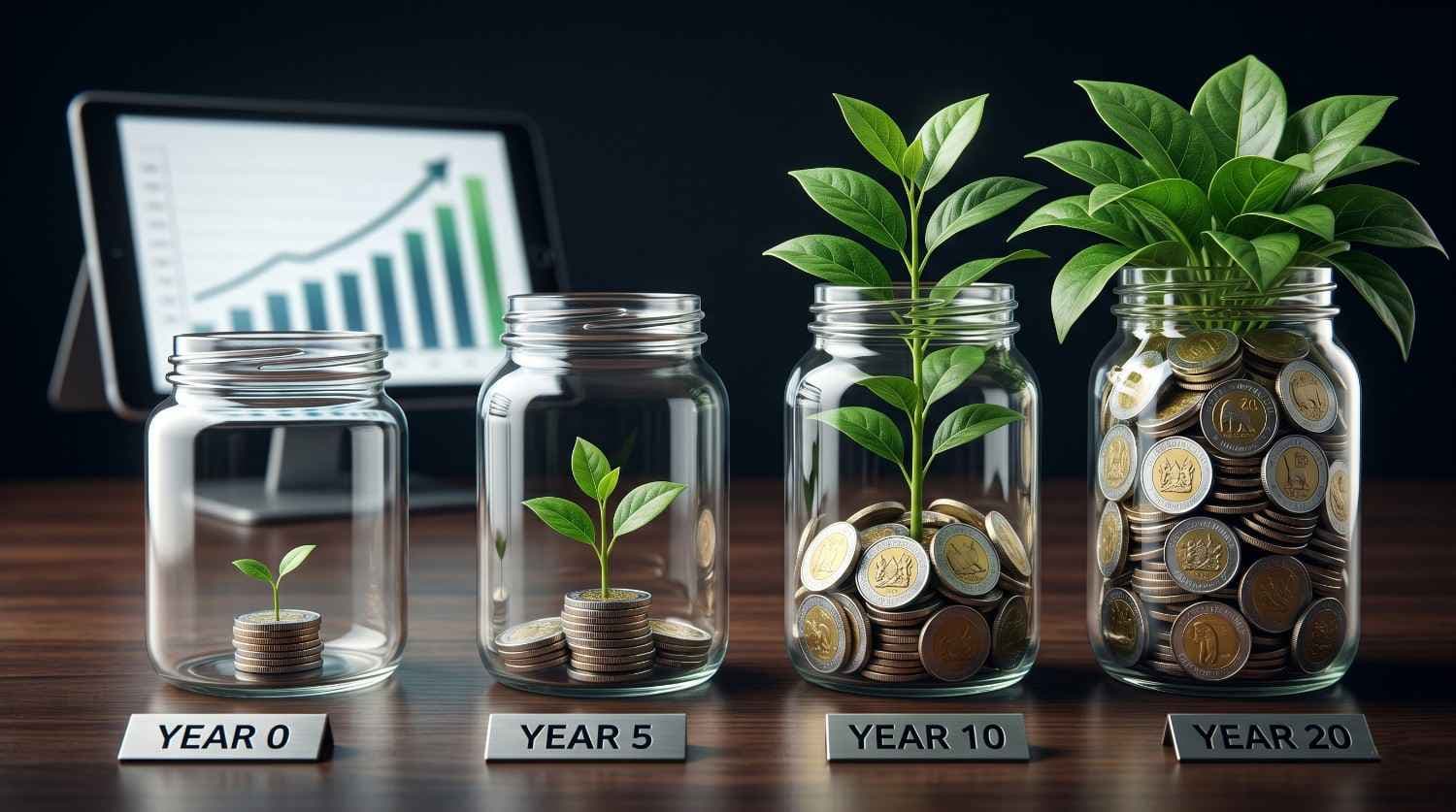
With this approach, an investor uses every dividend received to buy more shares of the same company to compound overtime. This is a proven strategy for long-term wealth, especially for the young investors. It is the single most powerful wealth-building mechanism available to the retail investor on the NSE, and the numbers prove it beyond any reasonable doubt.
The scenario below illustrates how reinvesting dividends may significantly enhance long-term portfolio growth through compounding. However, these outcomes depend on stable dividend payments, sustained business performance, reasonable valuations, and long holding periods. Investors should evaluate dividend sustainability, balance sheet strength, pay-out ratios, and total return potential rather than focusing solely on yield.
| Year | Portfolio (DRIP) | Annual Dividend | Monthly Income | Shares Owned | Without DRIP |
| Year 0 | Ksh 100,000 | Ksh 7,900 | Ksh 658 | ~3,226 | Ksh 100,000 |
| Year 5 | Ksh 168,200 | Ksh 15,300 | Ksh 1,275 | ~5,427 | Ksh 146,900 |
| Year 10 | Ksh 321,400 | Ksh 33,900 | Ksh 2,825 | ~10,368 | Ksh 215,900 |
| Year 15 | Ksh 583,700 | Ksh 72,600 | Ksh 6,050 | ~18,829 | Ksh 317,200 |
| Year 20 | Ksh 1,050,600 | Ksh 153,900 | Ksh 12,825 | ~33,890 | Ksh 466,100 |
| Year 25 | Ksh 1,882,400 | Ksh 323,700 | Ksh 26,975 | ~60,723 | Ksh 685,200 |
The table above makes the compounding argument more powerful than any paragraph of prose. At Year 20, the investor who reinvested every dividend holds a portfolio worth Ksh 1.05 million generating Ksh 12,825 per month in passive income without selling a single share. The investor who spent every dividend owns the same original shares but a portfolio worth only Ksh 466,100 less than half. The difference is Ksh 584,500 of pure compounding benefit, created solely by the decision to reinvest rather than spend.
b).Hybrid-Reinvestment
The strategy involves having a 50-50 approach to the dividends. This involves reinvesting 50% of the dividends and spending 50% of the dividends for personal use. Hybrid Reinvesting provides a balance for both growth and reward making a great strategy for investors between ages 40-55 approaching semi-retirement while looking into more investments.
With this, investors can rotate their share holding across different sectors that pay dividends in different months to help create consistency in dividend payment.
c). Income Harvest Strategy
With this strategy, the investor collects all the dividends but maintains their investment portfolio. This is best for retirees and investors who need the monthly cash flow.
The most powerful of these, validated by decades of academic research and the personal practices of the world's greatest investors, is dividend reinvestment. A 2022 Hartford Funds study of S&P 500 returns showed that from 1960 to 2022, dividends accounted for 84% of total market returns when reinvested. On the NSE, where price appreciation is often more volatile and thinner in liquidity, dividend reinvestment plays an even more important role in generating durable wealth.
The Dos and Don'ts of Dividend Investing
Drawing from the combined wisdom of Graham Buffett, and decades of NSE-specific investor experience, here is the definitive guide to what you should and should not do when building a dividend-focused investment strategy:
| The Dos | The Don'ts |
| Look for a sustainable pay-out ratio ideally below 75% of earnings | DON'T chase the highest yield blindly, a 20% yield almost always signals danger, not generosity |
| Reinvest dividends through a DRIP or manual reinvestment strategy to harness compounding | DON'T buy shares just before the ex-dividend date only to sell after you pay full tax and often lose more in share price drop than you receive |
| Check that free cash flow supports the dividend earnings can be manipulated, cash cannot | DON'T confuse a one-off special dividend with a recurring one always read the board resolution |
| Look at dividend history, 5+ years of consistent or rising payments signals management discipline | DON'T hold a stock with a declining dividend hoping it will recover without understanding why it was cut |
| Diversify your dividend income across sectors, don't put all your income eggs in one banking basket | DON’T ignore the ex-dividend date. If you buy on or after it, you do not receive that pay-out |
| Understand the tax treatment withholding tax in Kenya is 5% for residents, 10% for non-residents | DON'T confuse dividend yield with total return of stock paying 10% dividends but falling 20% is a net loss |
| Assess the company's growth reinvestment needs. A company paying 90%+ of earnings in dividends may be starving itself | DON'T be seduced by yield traps. Extremely high yields on NSE are often a distress signal, not a value opportunity |
The Yield Trap
Perhaps the most dangerous mistake a dividend investor can make, particularly in volatile markets such as the NSE, is falling into a yield trap. A yield trap occurs when a stock’s unusually high dividend yield reflects deteriorating business fundamentals rather than genuine value.
Dividend yield is calculated by dividing the annual dividend per share by the current share price. When a company’s share price falls sharply while the previous dividend remains unchanged, the reported yield can appear unusually attractive. However, quoted yields are backward-looking and may not reflect the company’s future ability to sustain those payments.
For example, if a company’s share price declines from Ksh 50 to Ksh 20 while its last annual dividend remains Ksh 3 per share, the indicated yield rises to 15%. While this may appear attractive, the decline in share price may signal weakening earnings, cash flow pressure, excessive leverage, or broader business deterioration. In such cases, future dividends may be reduced or suspended entirely. High dividend yields should therefore be analysed alongside pay-out ratios, free cash flow generation, debt levels, earnings stability, and management guidance. In many cases, investors attracted solely by headline yield suffer significant capital losses that outweigh the income received.
While high yields do not automatically indicate distress, sustained double-digit yields often require deeper investigation before capital is committed.
At Urim trader, you can build your capacity to distinguish between the genuine high yield value and yield traps. Through the app, you can observe the companies listed especially during this dividend paying season and determine what stocks to buy in the next season.
Related Journals

What are your thoughts?
Enjoyed this analysis?
Join other traders mastering the NSE with Urim.