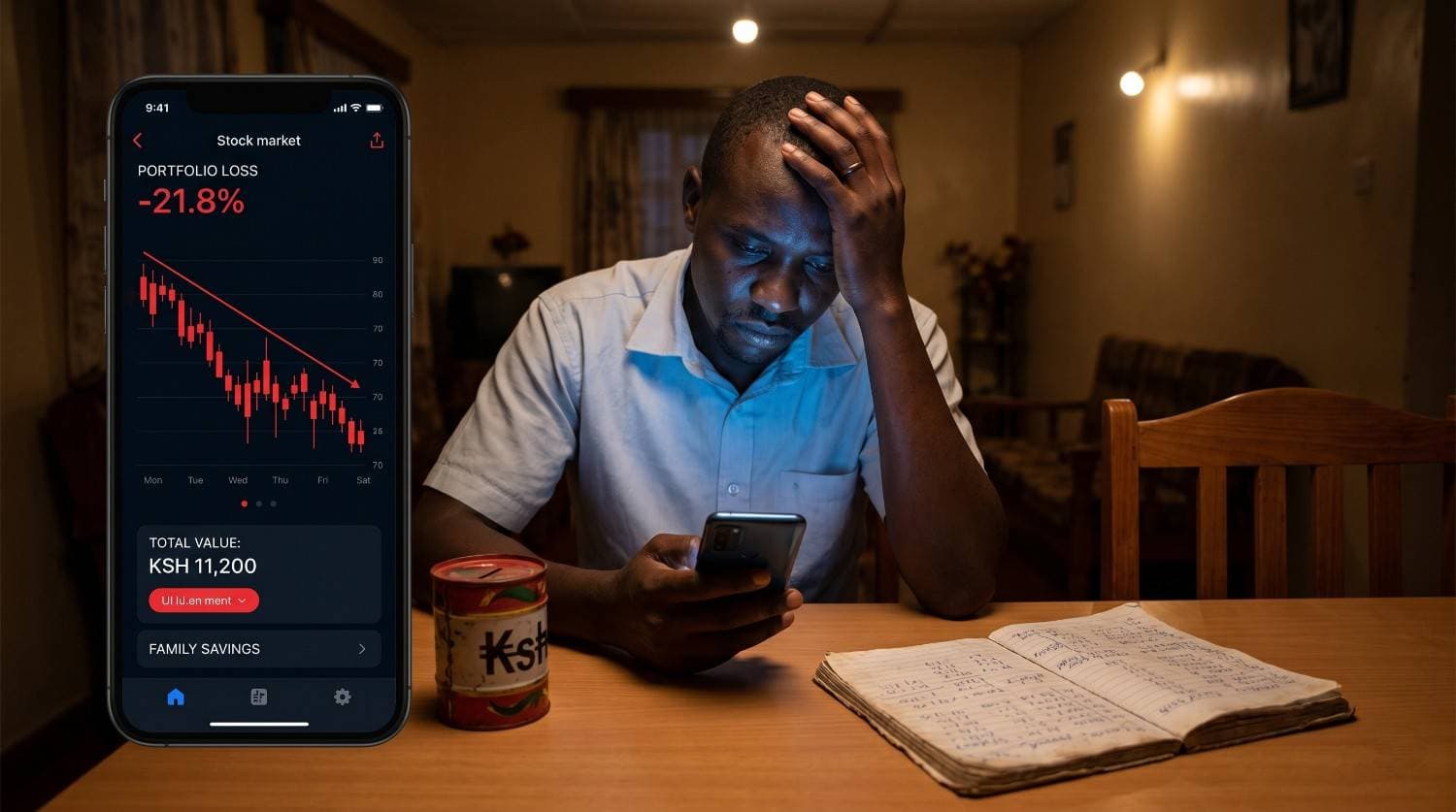
Why Do We Accept Losing Our Life Savings As The Normal Cost Of Learning The Nairobi Securities Exchange?
PUBLISHED PROTOCOL
June 2, 2026
Pukka Sam
Author

Every morning across Kenya thousands of hopeful retail investors log into their phones or peer at market tickers with the exact same burning ambition, the desire to build a reliable financial foundation for their families. They enter the financial markets with clean intentions, armed with hard earned savings built through years of exhausting labour, sacrifice, and discipline.
Yet for the vast majority of these individuals, the journey into the equities market does not begin with wealth creation. It begins with immediate, confusing, and often devastating capital loss.
The reality on the ground within the local investment ecosystem is brutal. The market operates like a massive machine that feels completely indifferent to the dreams of the retail trader. Without warning, a newcomer watches their core capital evaporate during a unexpected market shift, leaving them frozen in fear and questioning where they went wrong. This is the unwritten, unspoken tragedy of the modern investing landscape, a structural flaw that treats your life savings as raw fuel for market tuition.
The Paralyzing Trap of False Solutions.
In the absence of clear institutional guidance, the modern investor is easily lured into dangerous alternatives. The current ecosystem has given rise to unregulated social trading spaces, chaotic Telegram channels, and hyperactive WhatsApp tip groups filled with self-proclaimed market gurus. These spaces survive by manufacturing a lethal illusion, the promise of effortless returns through the dangerous habit of blind copying.
In these digital rooms, beginners are conditioned to abandon their critical thinking. They are told what to buy and when to sell based on pure hype, unverified rumours, or the emotional whims of anonymous internet strangers. This is not structural wealth accumulation; it is financial gambling disguised as community.
When you buy a stock simply because someone else told you to do so, you are operating with borrowed conviction. And when the market turns volatile, as it always does, borrowed conviction shatters into immediate panic. The retail investor is left holding a collapsing asset, completely blind to the underlying corporate fundamentals, while the online crowd moves on to the next trend.
On the opposite end of the spectrum, those who try to avoid the noise of social media find themselves trapped by a different obstacle, the sheer paralysis caused by clunky, professional brokerage interfaces.
Many traditional trading tools look and feel like they belong in a bygone era. They present the user with dense, unreadable walls of static data, complex financial terminology, and cold text boxes with absolutely zero contextual support. To a beginner, entering these portals feels like being dropped into the cockpit of a commercial airliner without an instructor.
There are no safety nets here. The system demands that you execute live trades with your actual, hard earned family capital just to discover how the interface functions. A simple operational error, an accidental fat finger buy order, or a misunderstanding of market settlement rules can wipe out months of earnings in a single afternoon. The industry expects you to risk real money just to learn the basic mechanics of transaction execution.
This broken environment has normalized a toxic belief within the Kenyan financial culture, the idea that losing your core savings is an unavoidable rite of passage. People refer to it as the traditional market tuition fee; an accepted cost of admission that dictates you must get burned before you can understand how the fireworks.
This is a profound logical error. In no other high stakes discipline do we expect human beings to risk destruction just to learn the basics. We do not train surgeons by handing them a scalpel and a live patient on day one, nor do we teach pilots by placing them in real storm clouds without simulator hours. Yet, the financial industry routinely expects retail investors to throw their real-world livelihood into the market fire just to build baseline familiarity.
This sacrificial framework is completely unnecessary. True market longevity does not require an initial offering of your savings. It demands an entirely different paradigm, a strict education first approach where independent analytical competence is systematically forged long before a single real shilling is placed on the line.
The Sanctuary of Risk-Free Competence.
There is light at the end of this financial tunnel. The cycle of emotional trading, blind copying, and accidental capital destruction can be permanently broken when technology is engineered to protect the user rather than exploit them.
Urim Trader emerges as a market sanctuary explicitly designed to bridge this devastating retail data gap. It completely eliminates the traditional tuition fee by introducing a one hundred percent risk-free, real-time simulator funded entirely with virtual capital.
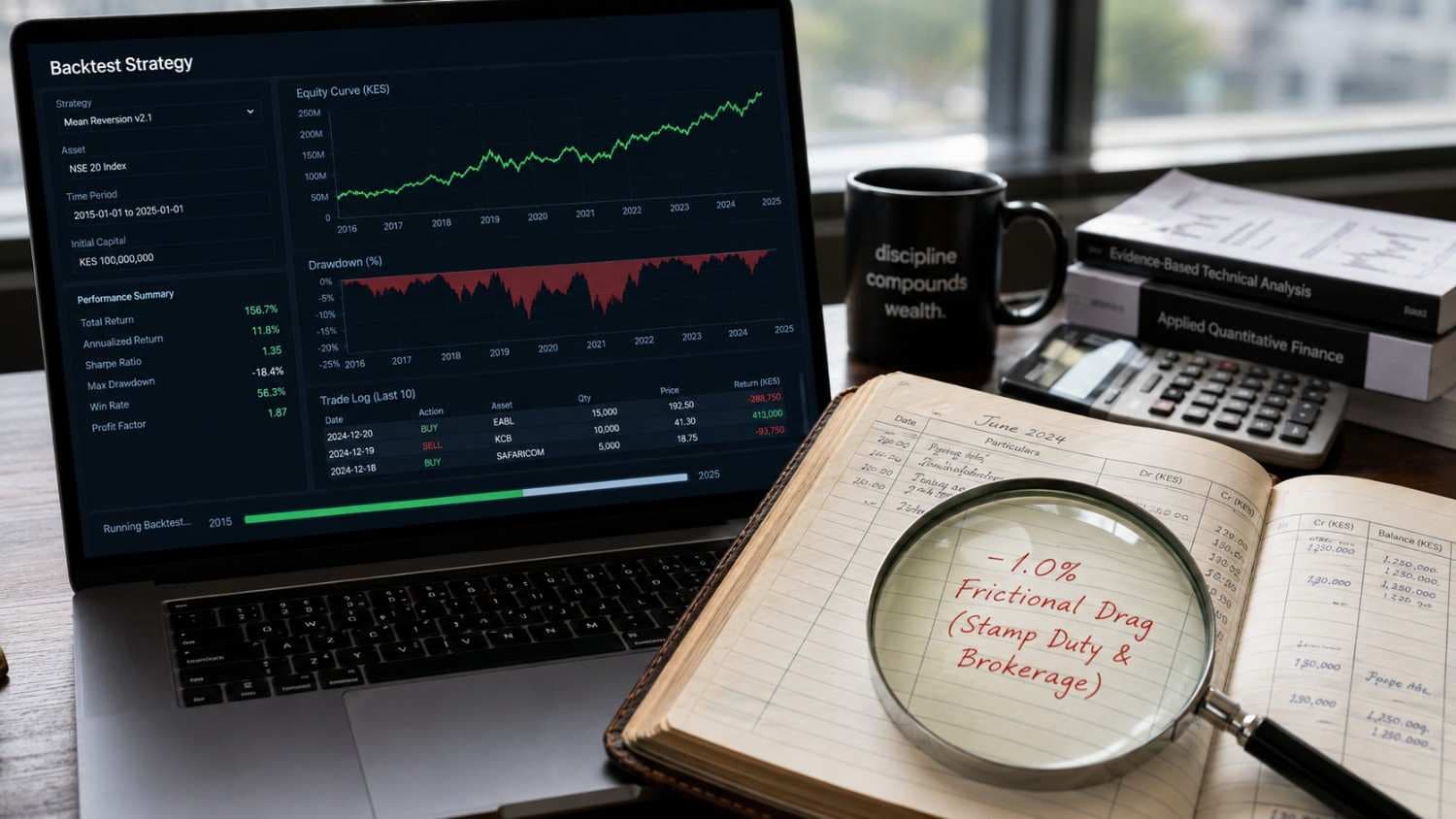
The platform flawlessly replicates actual market conditions, giving you the absolute freedom to make massive rookie mistakes, experience severe market volatility, and test wild trading theories without the real-world financial ruin. By interacting with realistic simulated trading fees and true market telemetry, your perspective shifts entirely. You stop chasing empty internet rumours and begin evaluating equities with structural discipline, ensuring that your financial competence is fully matured before your real-world financial commitment ever begins.
We fundamentally believe that nobody should have to lose their savings just to learn how the stock market works. With Urim Trader, your first losses are virtual, but the analytical competence you build is incredibly real.
Related Journals
What are your thoughts?
Enjoyed this analysis?
Join other traders mastering the NSE with Urim.