Is the 92% Surge in Kenya Airways (KQ) a Genuine Turnaround or the Ultimate Speculative Trap?
PUBLISHED PROTOCOL
April 24, 2026
Wanjiku Kibiru
Author

Kenya Airways (KQ) is now the most talked-about stock on the Nairobi Securities Exchange (NSE). This followed the purchase of 10,396,251 shares for Ksh. 49.2 million by Hon. Ndindi Nyoro and 2,334,623 shares for Ksh. 11 million by Alice Ng’ang’a as of April 2, 2026. Their purchases pushed the share price from Ksh. 4.74 up to Ksh. 8.14, then down to Ksh. 6.12. The share price has surged by 92% since January, making it the second-best performing stock on the NSE. The big question is, Is this surge due to better financials or speculation?
Kenya Airways is Kenya’s largest airline and national carrier. It operates both domestically and internationally, covering 43 destinations in Africa, Europe, Asia, North America, and the Middle East. KQ generates revenue from passengers, freight, mail, and group handling. The airline continues to expand, adding two freighters in 2024 and raising cargo revenue by 25.1%.
In 2024, KQ reported its first profit for the year ending December 31, 2004. This was historic, following years of losses and the completion of Project Kifaru. Revenue grew by 6% in 2024 to 188.5 billion. Net profit reached Ksh. 5.4 billion. However, analysts say the 2024 profit was not fully operational. The 25% appreciation of the Kenyan shilling against the US dollar in 2024 reduced forex losses creating a thriving environment for the airline. However, the favourable forex conditions did not last. In 2025, KQ whooped back to Ksh. 17.2 billion net loss, erasing the historic profit in 2024.
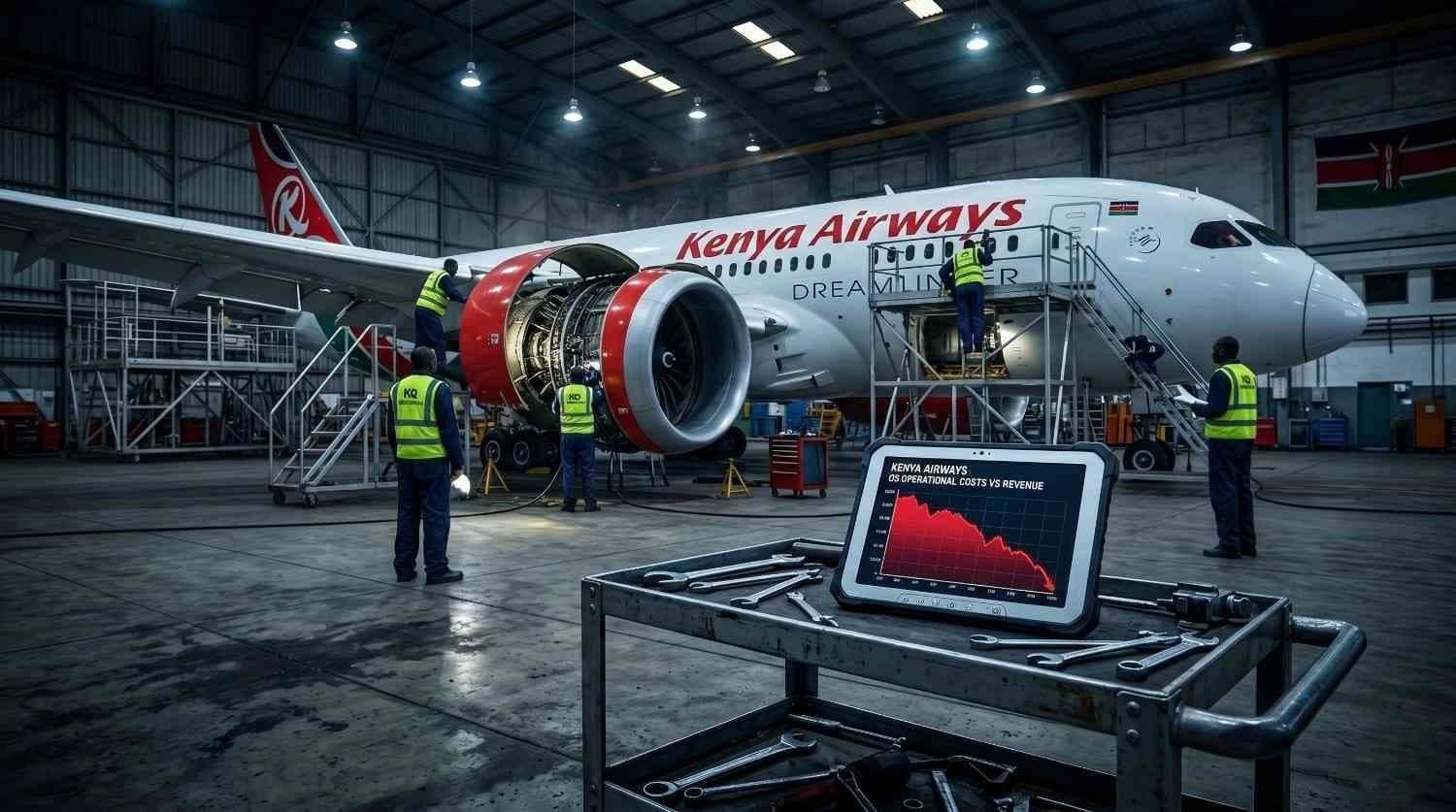
One of the causes of the net loss is engine maintenance on three Boeing 787-8 Dreamliners. They represent 33% of KQ’s wide-body fleet resulting in a Ksh. 27 billion revenue loss, despite robust passenger demand. KQ’s debt outstrips its assets, undermining equity and liquidity, creating severe risk. The airline has recorded losses for 13 consecutive years; 2024 stands alone as an anomaly, not a turnaround. Persistently negative equity, perpetual lack of earnings, no clear liquidation path, and reliance on government support define its unstable position.
As of January 2026, KQ reported a Ksh. 17.2 billion net loss for the year 2025. Due to these results, the stock has been relatively quiet at Ksh 3.53 per share. However, February regulatory filings revealed that Ndindi Nyoro acquired 10,396,251 shares at Ksh. 4.74 per share. Based on his reputation as an astute investor in the NSE, his filings made a market-moving event. At the same time, the Cabinet Secretary for the National Treasury announced the sale of Kenya Airways to foreign investors. The deal is expected to inject Ksh. 154.8 million to Ksh. 258 billion as capital, which could restructure the airline. Risk assessment by industry experts reveal that the sale is shaped by execution uncertainties, stalled negotiations, and Kenya Airways’ ongoing financial instability eliminating the bull case for KQ.
Therefore, KQ is a high-risk, speculative stock now, not a value investment. The current price surge is driven by narrative momentum, not by technical or fundamental analysis. The company’s risk profile remains materially high with volatility and uncertainty, making it suitable for risk-tolerant speculative investors. To follow through with KQ’ s change in share price, you can use the URIM TRADER APP that is now available on the website. With everyday observation of the share price and upcoming news you can make a distinctive decision on whether to invest in KQ shares. Remember, you can never time the market, but time in the market makes you a smart investor. Good luck!
Related Journals

What are your thoughts?
Enjoyed this analysis?
Join other traders mastering the NSE with Urim.