How Well Do You Actually Know the 12 Sectors of the Nairobi Securities Exchange? Are You Dangerously Concentrated?
PUBLISHED PROTOCOL
April 20, 2026
Wanjiku Kibiru
Author

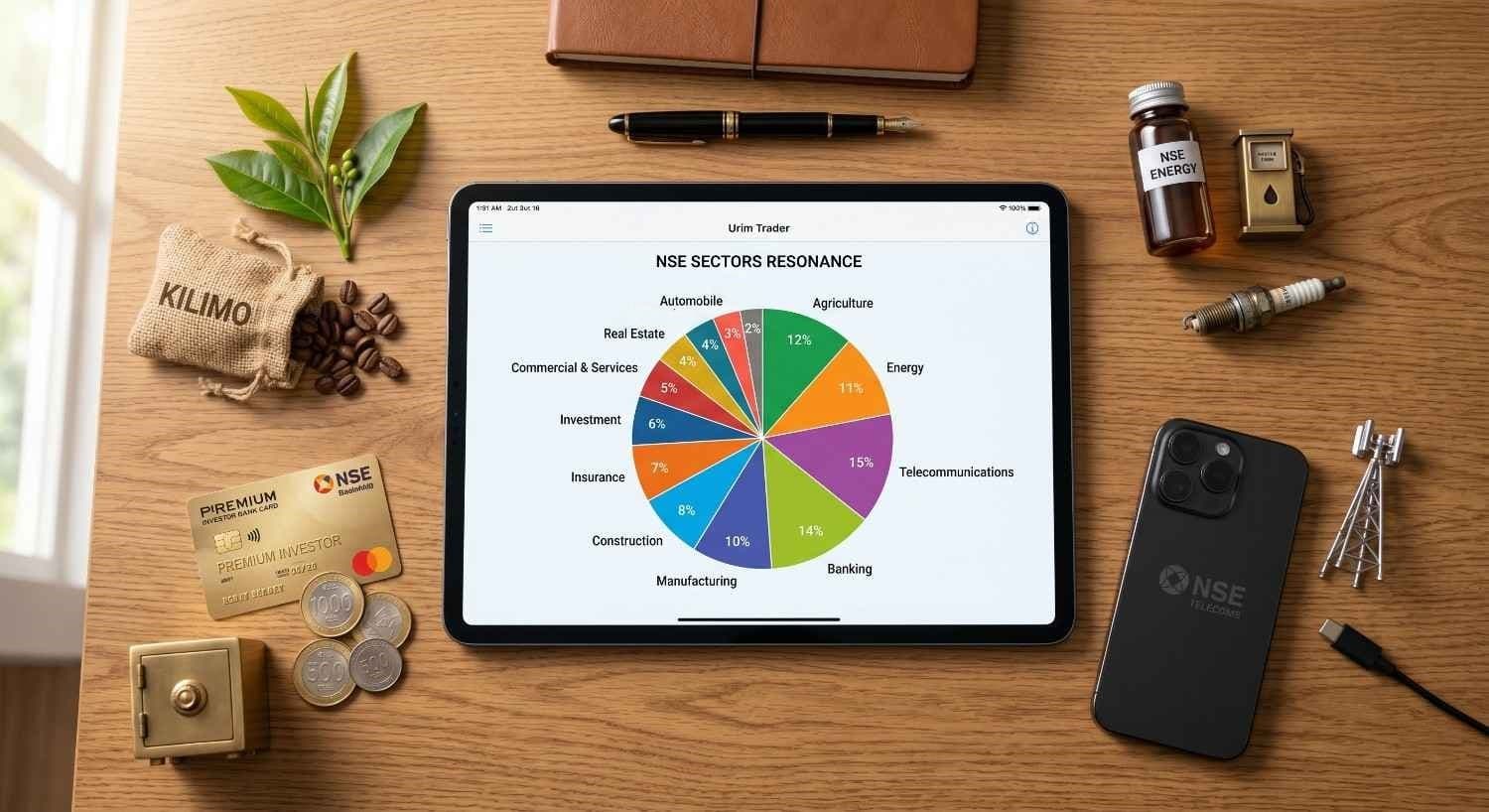
The Nairobi Securities Exchange (NSE) is one of the most technologically advanced stock exchanges in Africa. Since its incorporation in 1991, the capital market has grown into a sophisticated marketplace with over 63 companies. These companies operate within different industries, which has resulted in 12 distinct sectors in the NSE. These sectors are banking, insurance, investment, telecommunication, agricultural, manufacturing, commercial and services, construction, energy and petroleum, investment services, automobile and accessories, and exchange traded funds (ETFs).
This article examines and digs deep into each of these twelve sectors represented on the NSE. It provides a detailed overview of the sectors and the companies listed within it.
1. Banking sector
The banking sector is the largest and most influential segment of the NSE. It contributes significantly to the NSE’s total market capitalization due to the banks' rapid expansion, regional acquisitions, and technology-led financial inclusion strategies. The sector is regulated by the Central Bank of Kenya (CBK) that has provided testing and reporting guidelines which has led to stronger and better capitalized banking institutions. The listed companies under this sector are:
- Absa Bank Kenya Plc
- Co-operative Bank of Kenya Plc
- Diamond Trust Bank Kenya Plc
- Equity Group Holdings Plc
- HF Group Plc
- I&M Holdings Plc
- KCB Group Plc
- NCBA Group Plc
- National Bank of Kenya Plc
- SBM Holdings Plc
- Standard Chartered Bank Kenya Plc
- Stanbic Holdings Plc
- Guardian Holdings Plc
2. Insurance sector
The insurance sector on the NSE is composed of life, general, medical and composite insurers. The companies serve both retail and institutional clients through medical insurance, life insurance, motor insurance, pensions and investment products. Companies such as Jubilee Holdings have diversified into asset management services, making them financial institutions rather than pure insurers. The sector is well regulated by the Insurance Regulatory of Kenya (IRA) which has maintained order and stability within the sector. The listed companies under this sector are:
- Britam Holdings Plc
- CIC Insurance Group Plc
- Jubilee Holdings Ltd
- Kenya Reinsurance Corporation Plc
- Liberty Kenya Holdings Plc
- Sanlam Kenya Plc
- UAP Old Mutual Holdings Plc
3. Agricultural sector
Agriculture is the cornerstone of the Kenyan economy. It has contributed to the local and foreign exchange earnings for the country through agricultural produce such as tea, coffee and horticultural exports. The sector on the NSE is dominated by tea and plantation companies that sell through the Mombasa Tea Auction, one of the largest tea auctions globally. Kenya's tea is globally renowned for its quality, particularly teas produced in the highlands around Kericho, Nandi, and the Rift Valley. It is important to note that this sector is influenced by different factors such as climate change, currency exchange rates, and global markets. The listed companies under this sector are:
- Eaagads Ltd
- Kakuzi Plc
- Kapchorua Tea Kenya Plc
- Limuru Tea Company Plc
- Real Vipingo Plantations Ltd
- Sasini Plc
- Williamson Tea Kenya Plc
4. Telecommunication sector
The telecommunication sector is home to just one company on the NSE, Safaricom Plc. It is by far the single most important listing on the entire exchange as it accounts for 20-25% of the NSE total market capitalization. This makes its share price movements an enormous driver of overall market performance.
Safaricom was listed on the NSE in 2008 in what remains Kenya's largest IPO to date. The company is Kenya's dominant mobile network operator, with over 40 million subscribers. Its M-Pesa mobile money platform has become a global case study in financial inclusion, processing billions of dollars in transactions annually as it is the backbone of Kenya's digital payments ecosystem. Beyond mobile money, Safaricom provides broadband internet, enterprise cloud services, and digital content platforms. The company has expanded into Ethiopia, Africa's second-most populous country presenting a major long-term growth opportunity. Earlier this year (2026), Safaricom launched Ziidi Trader, a service that allows users to trade NSE shares directly through the M-Pesa app, potentially democratizing the stock market.
- Safaricom Plc
5. Manufacturing & allied sector
The manufacturing and allied sector is among the broadest sector on the NSE as it spans through food and beverage production, tobacco production, agro-processing, consumer goods, cement, paints and industrial gases. These companies produce and sell their products to both the Kenyan local market and the East African region.
East African Breweries Ltd (EABL) is the sector's flagship company and one of the NSE's most widely traded stocks. EABL produces iconic brands including Tusker lager, Senator Keg, and Guinness Kenya. British American Tobacco Kenya (BAT Kenya) is another prominent listing, offering some of the highest dividend yields on the exchange and maintaining a loyal base of income-seeking investors. Bamburi Cement, a subsidiary of Holcim Group, and ARM Cement represent Kenya's construction materials industry, supplying cement across East Africa. Carbacid Investments specialises in the production of carbon dioxide, a critical ingredient in the beverage and food processing industries. Unga Group operates flour milling and animal feeds manufacturing, making it integral to Kenya's food security supply chain. Eveready East Africa, once a major dry cell battery manufacturer, has pivoted toward energy solutions.
The listed companies under this sector are:
- B O C Kenya Plc
- BAT Kenya Plc
- Bamburi Cement Plc
- Carbacid Investments Plc
- Crown Paints Kenya Plc
- East African Breweries Ltd
- Eveready East Africa Plc
- Flame Tree Group Holdings Ltd
- Kenya Orchards Ltd
- Mumias Sugar Company Ltd
- Shri Krishana Overseas Plc
- Unga Group Plc
6. Commercial & services sector
The commercial and services sector encompasses a diverse set of companies providing media, aviation, retail, advertising, publishing, and hospitality services. It reflects the breadth of Kenya's service economy, which has grown rapidly alongside urbanisation and rising consumer incomes.
Nation Media Group is East Africa's largest privately-owned media house, publishing newspapers, operating television stations, and running digital content platforms across multiple countries. Standard Group is another major media player. WPP ScanGroup (now known as Scangroup) is sub-Saharan Africa's largest marketing and communications group, listed on both the NSE and the JSE. Kenya Airways, the national flag carrier, has had a turbulent financial history marked by heavy losses, debt restructuring, and government bailouts, but remains a significant employer and strategic asset for the country's aviation infrastructure. TPS Eastern Africa operates the Serena Hotels group, catering to the high-end tourism and hospitality market. Longhorn Publishers serves the educational publishing market across East Africa, supplying textbooks and learning materials. The sector is highly sensitive to macroeconomic conditions, consumer confidence, and government policy changes.
The listed companies are:
- Car & General (K) Plc
- Express Kenya Plc
- Kenya Airways Plc
- Longhorn Publishers Plc
- Nation Media Group Plc
- Scangroup Plc
- Standard Group Plc
- TPS Eastern Africa (Serena) Plc
- Uchumi Supermarkets Plc
- WPP Scangroup Plc
7. Energy & petroleum sector
The energy and petroleum sector covers oil marketing companies, electricity generators and distributors, and energy infrastructure operators. Kenya's energy landscape is undergoing transformation, driven by ambitious renewable energy targets, geothermal development, and private sector participation in electricity generation.
Kenya Power & Lighting Co. (KPLC) is the country's sole electricity distributor, responsible for transmitting and distributing power to millions of households and businesses. The Kenya Electricity Generating Company (KenGen) operates the bulk of Kenya's power generation assets, including geothermal plants in the Olkaria region, hydropower stations, and wind farms. Kenya is a global leader in geothermal energy, ranking among the top producers worldwide. KenolKobil and Total Kenya are oil marketing companies, distributing petroleum products across the retail and commercial markets. In a landmark development, Kenya Pipeline Company (KPC) , the parastatal responsible for transporting petroleum from Mombasa to upcountry depots via pipeline was listed on the NSE in March 2026. It is Kenya's largest IPO since Safaricom's debut in 2008. The listing was oversubscribed, reflecting strong investor appetite for energy infrastructure assets. Umeme, a Uganda-based electricity distributor, maintains a cross-listing on the NSE.
The listed companies are:
- KenolKobil Ltd
- Kenya Electricity Generating Company Plc
- Kenya Pipeline Company Plc
- Kenya Power & Lighting Co. Plc
- Total Kenya Plc
- Umeme Ltd
8. Construction & allied sector
The construction and allied sector cover companies engaged in building materials, real estate development, cables and wiring, and construction services. Kenya's sustained infrastructure investments which are roads, railways, energy projects, and affordable housing create underlying demand for companies in this sector.
East African Cables manufactures copper and aluminium cables for power transmission and telecommunications, benefitting from Kenya's expanding electricity grid and regional fibre infrastructure projects. Home Afrika has focused on affordable housing development — a critical need, given Kenya's estimated housing deficit of over 200,000 units annually. The sector has been supported by government initiatives such as the Affordable Housing Programme, which aims to construct hundreds of thousands of units for low- and middle-income Kenyans.
The listed companies are:
- ARM Cement Plc
- East African Cables Plc
- East African Portland Cement Plc
- Home Afrika Ltd
- Kurwitu Ventures Ltd
9. Investment sector
The investment sector comprises diversified holding companies and private equity-style corporations that finance multiple industries including real estate, energy, financial services, and manufacturing. These companies indirectly exposure investors to a portfolio of assets through a single listed vehicle.
Centum Investment Company is the largest and most prominent player in this sector, with a portfolio covering real estate developments in Nairobi (Two Rivers), energy projects, and financial services stakes. TransCentury operates in infrastructure and engineering, while Olympia Capital Holdings is a smaller diversified empire. However, the sector has faced pressure in recent years from write-downs on illiquid private assets and the complexity of valuing underlying holdings, which can lead to wide discounts to net asset value (NAV) on the open market.
The companies listed within this sector are:
- Centum Investment Company Plc
- Olympia Capital Holdings Plc
- TransCentury Plc
10. Investment services sector
The investment services sector is a small but symbolically significant segment of the NSE, housing the exchange itself alongside Real Estate Investment Trusts (REITs). It represents the infrastructure of Kenya's capital markets ecosystem.
Nairobi Securities Exchange Plc is itself a listed company. It is the second African exchange after the Johannesburg Stock Exchange to demutualize and list its own shares. This structure aligns the exchange's interests with those of its investors and promotes accountability and transparency in its governance. The NSE's own share price reflects market confidence in the exchange's growth strategy and the broader health of Kenya's capital markets. Stanlib Fahari I-REIT is Kenya's first income REIT, investing in commercial real estate properties and distributing rental income to unit holders. The Africa Logistics Properties REIT (ALP REIT), launched by Africa Logistics Properties Holdings, recorded a 115% subscription rate in its IPO, signalling growing investor appetite for real estate-backed investment products. REITs offer Kenyan investors a regulated way to access commercial property returns without the capital requirements of direct ownership.
The listed companies are:
- Nairobi Securities Exchange Plc
- Stanlib Fahari I-REIT
- Africa Logistics Properties REIT (ALP REIT)
11. Automobiles & accessories sector
The automobiles and accessories sector is the smallest on the NSE by number of listed companies, comprising just two entities. It covers the distribution of motor vehicles, automotive parts, and related accessories in the Kenyan and East African markets.
Marshalls East Africa is involved in the import and distribution of vehicles and heavy equipment, serving commercial clients in sectors such as mining, construction, and agriculture. Sameer Africa, formerly a tyre manufacturer operating under the Firestone brand. It has pivoted its business model by repositioning toward property and other businesses. The automotive sector faces structural challenges from the dominance of second-hand vehicle imports (especially from Japan), high import duties, and the nascent but growing penetration of electric vehicles. However, increasing formality in fleet management among Kenyan corporates and the government's vehicle replacement programmes continue to provide a base of demand for authorized distributors.
The listed companies are:
- Marshalls East Africa Plc
- Sameer Africa Plc
12. Exchange traded funds (ETF) sector
The exchange traded funds (ETF) sector is one of the most innovative and rapidly growing segments of the NSE, offering investors a simple and cost-effective way to heavily diversify their portfolios. ETFs are listed investment products that track the performance of a basket of shares, bonds, or a specific commodity. They trade exactly like ordinary shares on the exchange, providing the same high liquidity and transparency, but with the added advantage of giving investors access to assets that were previously difficult to reach.
Absa NewGold ETF was the pioneer in this sector on the NSE, providing investors with a direct and secure way to invest in physical gold without the logistical challenges of buying and storing the precious metal. It serves as a critical safe-haven asset and a hedge for investors during times of macroeconomic volatility and inflation. More recently, the sector expanded to include the Satrix MSCI World Feeder ETF, which provides Kenyan investors with unprecedented exposure to global equity markets by tracking major companies across developed economies worldwide. This sector democratizes access to alternative and global asset classes for the everyday retail investor.
The listed funds under this sector are:
- Absa NewGold ETF
- Satrix MSCI World Feeder ETF
The Nairobi Securities Exchange represents the full breadth of Kenya's economic landscape. From telecommunications and banking giants that have transformed financial inclusion across Africa, to tea estates that have produced some of the world's finest teas for over a century. With 12 sectors and over 63 listed entities, the NSE provides investors with diverse avenues for participating in Kenya's growth story.
Key structural developments in 2025 and 2026 include the debut of Kenya Pipeline Company in Kenya's largest IPO since Safaricom, the launch of M-Pesa-integrated share trading through Ziidi Trader and continued cross-border banking expansion. As the NSE executes its 2025–2029 strategic plan, the exchange aims to deepen liquidity, attract new listings, and expand retail investor participation, positioning itself as the gateway to East African investment for both local and international investors.
Yet for many Kenyans, the world of stock market investing has remained out of reach perceived as complex, risky, or accessible only to a few. That gap is exactly what Urim Trader App is built to close. The digital trading platform gives every Kenyan the tools, knowledge, and confidence to participate in the NSE. Whether you are a first-time investor trying to understand how the stock market works, or a seasoned trader looking for a seamless digital experience, this is the app for you.
The platform covers all twelve NSE sectors described in this article, giving investors complete visibility into Kenya’s listed companies and the industries driving the country’s economy. What sets Urim Trader apart is its emphasis on financial literacy before financial commitment. The platform features an integrated learning environment, sector guides, and company deep-dives so that users can build their understanding of the NSE before placing a single shilling.
The NSE’s story ,seven decades of listing Kenya’s most important companies, surviving economic shocks, and evolving into a modern, automated exchange, is ultimately a story about opportunity. Urim Trader exists to ensure that opportunity is no longer reserved for a few. From the banking halls of Equity Group to the tea fields of Williamson Tea, from Safaricom’s M-Pesa revolution to the pipelines of Kenya Pipeline Company, the companies on this exchange represent Kenya’s present and its future.
What are your thoughts?
Enjoyed this analysis?
Join other traders mastering the NSE with Urim.